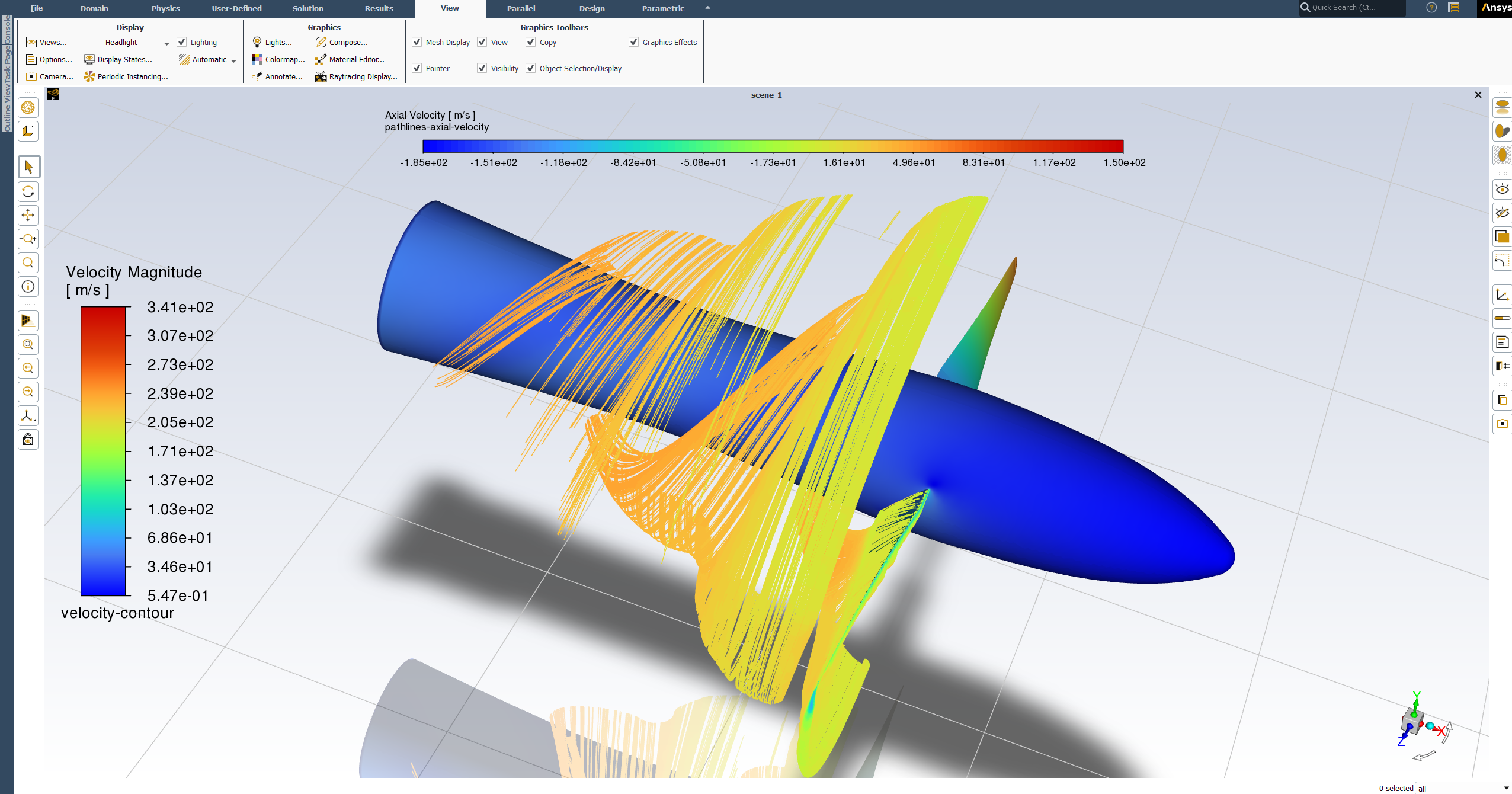
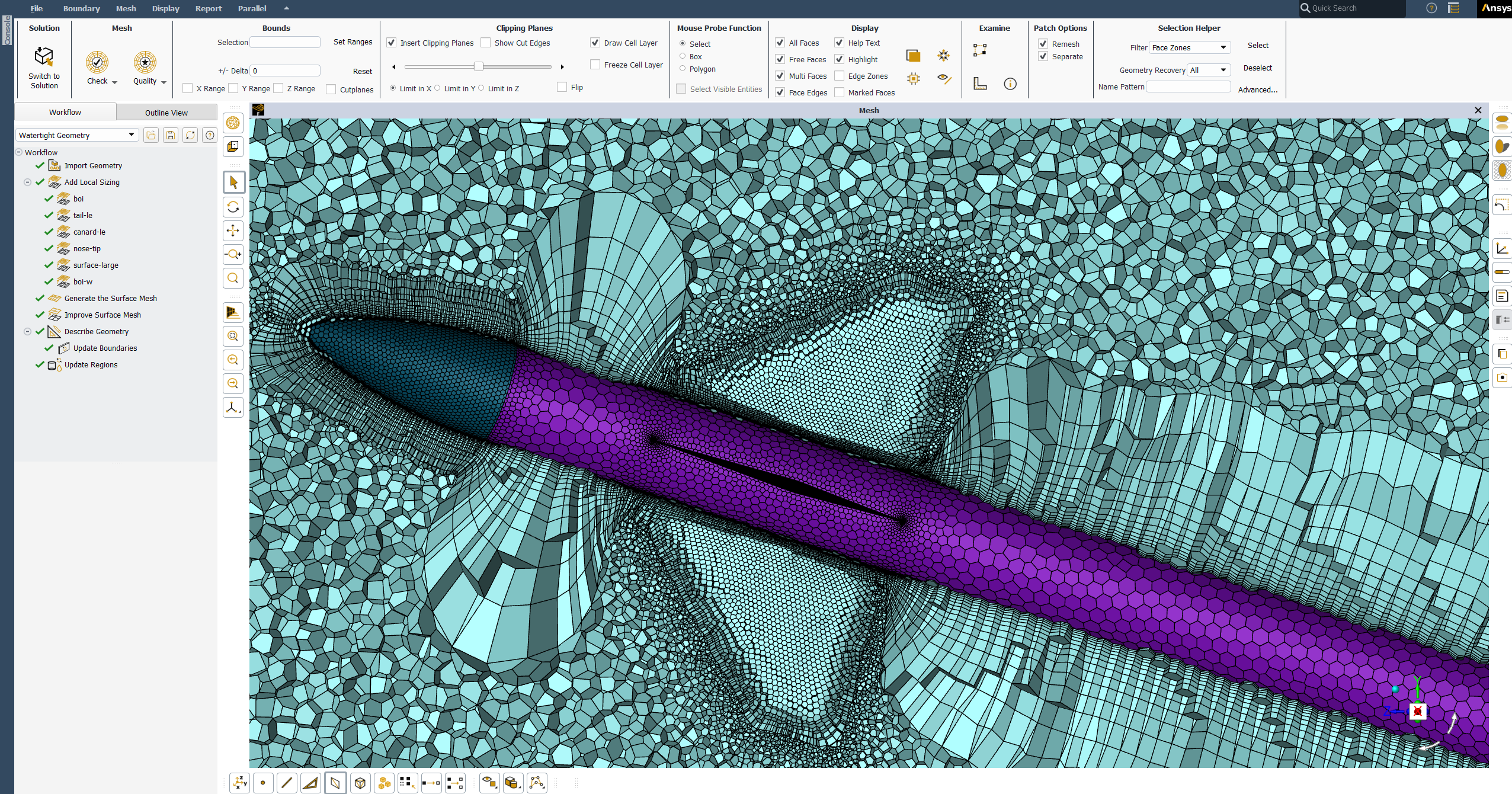
A complete external aerodynamics CFD simulation of the NACA 4-(3)(08)-03 two-blade research propeller, one of the most well documented propeller geometries in aerodynamics, with published experimental data available for validation. This project covers the full CFD workflow from geometry preparation in SpaceClaim to post-processing and experimental thrust validation in Ansys Fluent. The simulation is built around the Reference Frame Motion Modeling approach, also known as the Frozen Rotor method, which allows the rotating propeller to be simulated efficiently without physically moving the mesh, making it ideal for steady-state propeller aerodynamics. The domain is modeled as a 180 degree periodic sector taking advantage of the two-blade symmetry to reduce computational cost while preserving full solution accuracy. Special attention is given to the correct setup of the rotating and stationary fluid domains, the creation of rotational periodic interfaces and the proper blade wall boundary condition setup inside a rotating reference frame. Every solver setting and modelling decision is explained in detail so you understand not just what to select, but why, giving you the engineering judgment to apply the same approach to your own rotating machinery projects.